Apps to Meet People Nearby: 7 Friendship-First Options
Compare seven friendship-first apps for meeting people nearby through live social maps, shared interests, small groups, local events, neighborhood communities, and structured activities.

On this page
- How these apps were selected
- Quick guide: which app fits your goal?
- 1. iS Gather — best for spontaneous nearby discovery
- 2. Meetup — best for hobbies and organized groups
- 3. Bumble For Friends — best for one-to-one friend matching
- 4. We3 — best for meeting in small friendship groups
- 5. Timeleft — best for structured social dinners
- 6. Nextdoor — best for meeting people in your neighborhood
- 7. Peanut — best for women connecting through shared life stages
- How to keep a friendship app from feeling like dating
- Safety checklist for meeting someone from an app
- How to turn one meeting into an actual friendship
- Frequently asked questions
- The bottom line
Meeting people nearby should not require pretending you want a date. A growing group of apps focuses instead on friendship, shared interests, neighborhood life, and structured real-world activities.
The right choice depends on how you prefer to connect. You might want spontaneous discovery on a live map, a scheduled hobby group, a small friendship match, a neighborhood conversation, or a hosted dinner where everyone arrives for the same reason.
How these apps were selected
This guide compares active services that provide a clear path to platonic or community connection. Each option has a different primary use case, so this is not a universal ranking. We reviewed the services' current official descriptions, how they help people connect locally, and the amount of structure they provide before an in-person meeting.
Availability, pricing, age requirements, and features can vary by country. Always confirm the current terms in the app before joining.
Quick guide: which app fits your goal?
- Choose iS Gather for spontaneous discovery through a live social map.
- Choose Meetup for hobbies, clubs, and scheduled group activities.
- Choose Bumble For Friends for profile-based one-to-one friendship discovery.
- Choose We3 for compatibility-based friendship groups of three.
- Choose Timeleft for structured dinners and hosted social experiences.
- Choose Nextdoor for neighborhood relationships and local conversations.
- Choose Peanut for women seeking friendship around shared life stages.
1. iS Gather — best for spontaneous nearby discovery
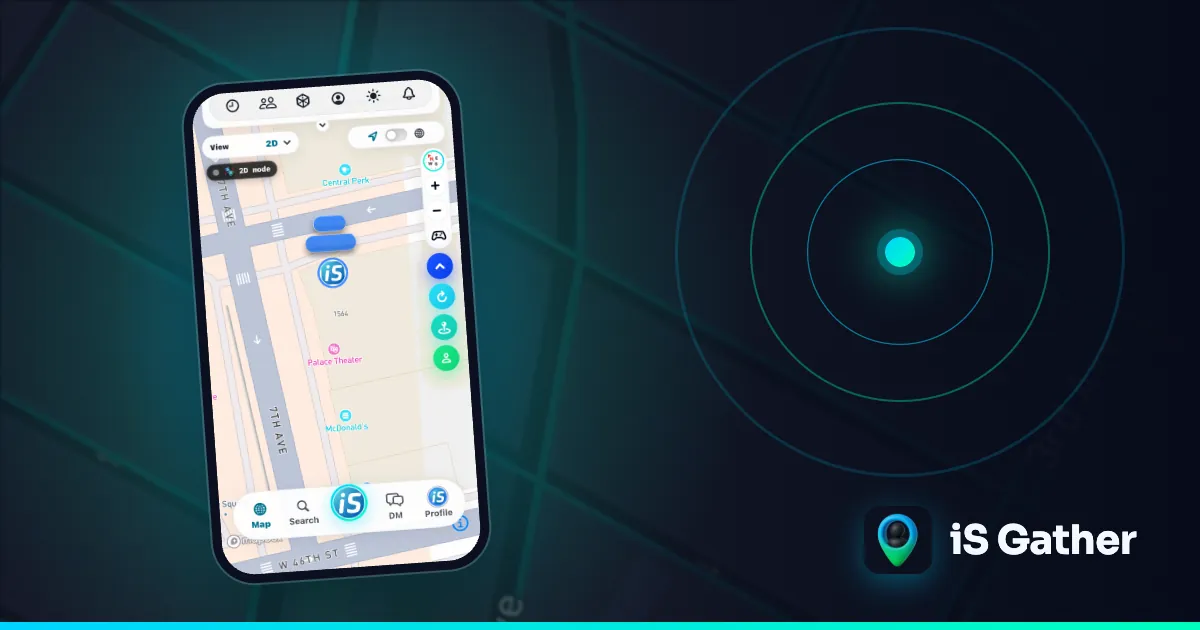
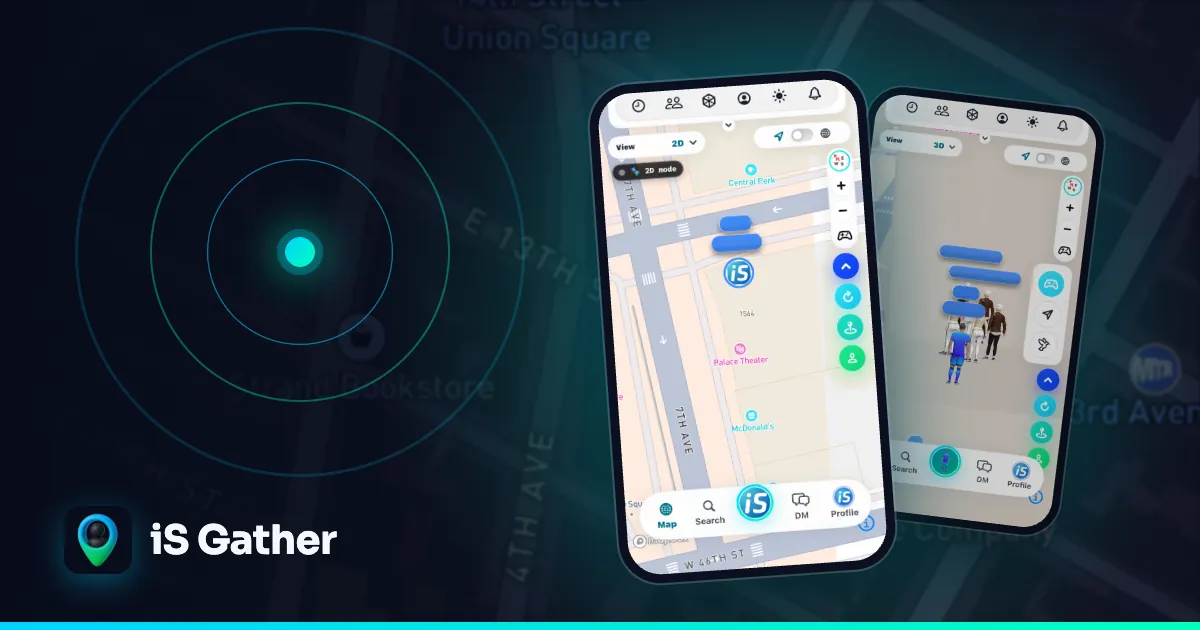
iS Gather is a map-first social network built to make nearby social activity visible. People can explore an interactive map, discover other members and local activity, use one-tap ice breakers, message, and watch short videos without switching between separate discovery tools.
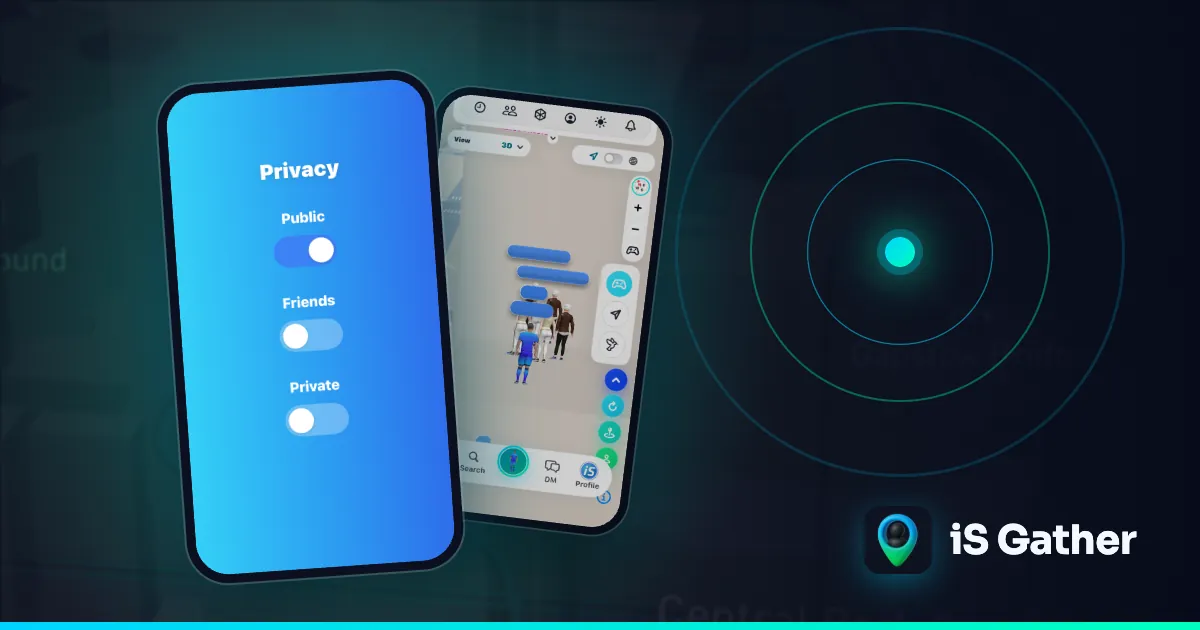
The experience is less like swiping through a dating catalog and more like entering a shared digital place. Personalized 3D avatars add context to the map, while public, friends-only, and ghost visibility modes give members control over whether they appear.
Best for:
- Seeing social activity around you in real time
- Starting a low-pressure conversation with someone nearby
- Combining a social map with messaging and short video
- People who want explicit location-visibility controls
Explore people and activity near you, review the privacy and safety FAQ, or open iS Gather.
2. Meetup — best for hobbies and organized groups
Meetup organizes local connection around a shared activity. Groups can focus on hiking, technology, language exchange, photography, parenting, professional networking, games, or almost any other interest. Members browse communities and RSVP to scheduled gatherings.
The event gives everyone an immediate reason to be there, which can make the first conversation easier. Meetup is especially useful when you prefer a known time, venue, host, and group purpose before meeting anyone.
Best for:
- Finding recurring local clubs
- Meeting several people through a shared interest
- People who prefer scheduled plans over spontaneous discovery
Meetup explains how it recommends local groups and events.
3. Bumble For Friends — best for one-to-one friend matching
Bumble For Friends is a dedicated friendship app for finding people in your area. It uses profiles and friend discovery to help members identify people with compatible interests and intentions.
This format suits someone who wants to learn about an individual before starting a conversation. Because the interaction can resemble familiar matching interfaces, state clearly in your profile what kind of friendship and activities you want.
Best for:
- One-to-one platonic friend discovery
- Browsing profiles before chatting
- Making plans around shared interests
Read the official explanation of Bumble For Friends.
4. We3 — best for meeting in small friendship groups
We3 approaches friend matching in groups of three rather than one-to-one. Members answer questions about their personality, interests, lifestyle, and values, and the service uses those answers to form small group chats it calls Tribes.
The group format can reduce the pressure of a first conversation and gives everyone more than one person to respond to. Profiles are presented to matches rather than published as an open directory.
Best for:
- People uncomfortable with one-to-one matching
- Compatibility-based friendship discovery
- Starting with a small group chat before meeting
See how We3 forms friendship groups.
5. Timeleft — best for structured social dinners
Timeleft turns meeting new people into a scheduled group experience. Participants answer matching questions and join a dinner or another organized activity with people in their city.
This is useful if browsing profiles feels like work. Instead of maintaining a long chat first, you commit to a particular social experience where the other attendees also came to meet new people. Availability and booking costs depend on the city and activity.
Best for:
- People who want a planned first meeting
- Group dinners and structured social activities
- Moving from an app to an in-person conversation quickly
Check the current cities and experiences on Timeleft.
6. Nextdoor — best for meeting people in your neighborhood
Nextdoor centers its community around neighborhoods. Members use it for local questions, recommendations, community updates, lost-and-found posts, services, and neighborhood activities.
It is not primarily a friend-matching app, but repeated conversations about the same streets, schools, parks, and local issues can lead to genuine neighbor relationships. It works best when you want to become more involved where you already live.
Best for:
- Connecting with neighbors
- Finding hyperlocal groups, recommendations, and activities
- Building familiarity through ongoing community conversations
Visit Nextdoor to see whether it is available in your neighborhood.
7. Peanut — best for women connecting through shared life stages
Peanut is a friendship and support community for women, with a strong focus on motherhood and related life stages. It offers nearby friend discovery as well as interest-based groups and community discussions.
A shared life context can make introductions feel more relevant, particularly for someone seeking friends who understand pregnancy, parenting, fertility, or menopause experiences.
Best for:
- Women seeking nearby friends with similar experiences
- Motherhood and life-stage communities
- Combining local connections with peer support
Learn about Peanut's nearby friend and community features.
How to keep a friendship app from feeling like dating
Your profile and first message can set the tone before ambiguity develops.
- Say directly that you are looking for platonic friends.
- Mention two or three activities you would genuinely do with someone.
- Suggest a specific, public, low-pressure plan instead of endless messaging.
- Prefer group activities when a one-to-one meeting feels like too much.
- Respect a no, a slow response, or a change of plans without pressure.
An effective profile is concrete: “Looking for weekend hiking friends and people who want to try new coffee shops” gives someone an easier conversation opening than “I want to meet new people.”
Safety checklist for meeting someone from an app
- Meet in a busy public place and arrange your own transportation.
- Tell a trusted person where you are going and when you expect to return.
- Keep precise home and work locations private until trust develops.
- Use friends-only, approximate, temporary, or ghost visibility where available.
- Stay inside the platform for early conversations rather than immediately sharing personal contact details.
- Block and report harassment, pressure, impersonation, or suspicious requests.
- Leave immediately if the situation does not feel right.
Location access should always be a choice. Review permissions regularly and turn off background access when a feature does not need it. Our guide to meeting people nearby includes more ways to balance discovery and privacy.
How to turn one meeting into an actual friendship
Finding someone is only the beginning. Friendship usually develops through repeated, low-pressure contact.
- Follow up within a day with something specific you enjoyed.
- Suggest another simple activity instead of an open-ended “sometime.”
- Create a small recurring routine, such as a monthly walk or weekly class.
- Introduce compatible people to one another so the connection can become a group.
- Allow consistency to build without demanding instant closeness.
Frequently asked questions
Are friendship apps actually separate from dating apps?
Some are completely friendship-first, while others use familiar profile or matching mechanics. Look at the stated purpose of the service, choose its friendship mode where applicable, and make your platonic intent explicit.
What is the best app for shy or introverted people?
A structured Meetup activity, a We3 group chat, or a Timeleft dinner can remove the pressure of inventing a reason to talk. If you prefer to observe local activity before interacting, a social map such as iS Gather offers another starting point.
Can I meet people nearby without sharing my exact location?
That depends on the app. Look for approximate-location controls, friends-only visibility, temporary sharing, and ghost modes. Avoid publishing a home address or predictable daily routine.
Which option is best after moving to a new city?
Meetup is useful for recurring interest groups, Timeleft offers a structured first outing, Nextdoor introduces neighborhood context, and iS Gather can help you see people and activity around your current area.
The bottom line
You do not need to use a dating app to build a local social life. Choose the structure that makes you most comfortable: a live map, a hobby group, a small friendship match, a hosted dinner, or a neighborhood community.
If you want nearby discovery to feel immediate and visual, open iS Gather and explore the social map. Keep your visibility settings intentional, meet in public, and give promising connections enough repetition to grow into real friendships.
- #apps to meet people nearby
- #make friends nearby
- #friendship apps
- #meet people nearby
- #local social apps
Keep reading
 How-to
How to find friends nearby
Step by step: see people around you, send an ice breaker, stay private.
 Comparison
Best Location-Based Social Networks in 2026: 5 Apps Compared
Compare five location-based social networks for meeting nearby people, finding local communities, coordinating with friends, and discovering what is happening around you.
 Comparison
Zenly Alternatives in 2026: 5 Social Map Apps for Friends and People Nearby
Zenly closed on February 3, 2023. Compare five apps that cover what Zenly users miss: a live social map, friend location sharing, and meeting people nearby.